
Roncesvalles
❯ Zubiri
21km
STAGE DISTANCE
Information
The stage between Roncesvalles and Zubiri is, for very many pilgrims, the true beginning of the French Way. Although the complete route starts in Saint-Jean-Pied-de-Port, not everyone is up to crossing the Pyrenees on the previous day, so Roncesvalles has established itself as one of the great starting points of the Way in Spain. Its symbolic value is enormous: on one hand, because for centuries it was a place of shelter for those arriving exhausted after the Pyrenean crossing; on the other, because from here begins a succession of stages that lead the pilgrim through the heart of the French Way to Santiago. The locality itself maintains that air of a historic Jacobean enclave, presided over by the collegiate church and the ancient pilgrim hospital.
In terms of route, this second stage leaves behind the monumental surroundings of Roncesvalles and ventures into the Navarrese Pyrenees, among beech, oak, and pine forests, damp meadows, and small villages that emerged or developed under the protection of the Way. It is not as extreme a stage as the previous one, but it should not be underestimated either: it has a leg-breaking profile, with the climb to the Mezkiritz pass, a second ascent to the Erro pass, and a final descent to Zubiri that concentrates the greatest difficulty of the day. Specialized guides place it at around 21.4–21.5 km, with an average duration of about 5 hours and 15 minutes and a general medium difficulty level.
Furthermore, this is a very rewarding stage from a scenic perspective. Unlike the great Alpine harshness of the previous section, here the pilgrim travels through a more pleasant, green, and varied mid-mountain landscape, with traditional Pyrenean villages, dense forests, and some natural viewpoints that allow you to enjoy the transition between the Erro Valley and the Esteribar Valley. It is a very complete day: it has heritage, nature, history, and one of the most well-known stage endings in the Navarrese Way, with the arrival at the Bridge of the Madness of Zubiri.
Recommendation from The Way
Recommendation in stage 2: Roncesvalles - Zubiri
Although the stage officially ends in Zubiri, some pilgrims with more energy or with accommodation booked further ahead choose to continue to Larrasoaña, a few kilometers later. It is a real possibility and cited in Way guides, but only makes sense if you arrive at Zubiri with good legs, because the final descent from the Erro pass usually puts considerable strain on knees and ankles.
Precisely that descent is the most delicate point of the entire day. It is not the most appropriate section for people with reduced mobility and can also be uncomfortable for cyclists if the terrain is wet or slippery. Some guides recommend, in that case, considering the N-135 highway as an alternative at certain points, although with great caution, since it is a well-traveled route. By bike, moreover, there are several passages where it may be necessary to dismount to avoid falls or unsafe maneuvers.
My content advice for this page is to sell it as a transition stage: the pilgrim has already left behind the great Pyrenean crossing, but still walks through very green and mountainous landscape, with several climbing sections and a descent that demands maintaining attention. It is not a day to suffer like the first one, but rather one to walk carefully and not become overconfident in the final third.
Stage profile
Itinerary
The stage begins in Roncesvalles, one of the most emblematic towns of the Way of Santiago. Its collegiate church, the Chapel of Santiago, the Silo of Charlemagne, and the monumental ensemble surrounding the ancient pilgrim hospital make the departure a start laden with history. From the surroundings of Itzandegia and the tourist office, the path takes a trail parallel to the N-135, quickly heading into the Sorginaritzaga forest, also known as the Oakwood of the Witches. Consumer also notes along the route the Cross of Pilgrims, a Gothic cross relocated to this place in 1880.
This first section has great charm. The forest, the damp terrain, and the Pyrenean atmosphere accompany the pilgrim before reaching the first more open areas. It is a very beautiful and quite symbolic departure, because it marks the transition from the great Jacobean enclave of Roncesvalles to a day of forest, farmsteads, and small villages.
Local information · Roncesvalles
Police, medical attention, what to see, where to eat…
The first important stop is Auritz/Burguete, a street-village very linked to the Way and also to Hemingway’s literary imagination. Consumer describes it as a thoroughfare village organized around Calle San Nicolás, with heraldic houses from the eighteenth and nineteenth centuries. Its main monumental reference is the Church of San Nicolás de Bari, whose Renaissance facade was carved in 1699. Burguete preserves very well that image of an ordered, sober, and elegant Pyrenean hamlet.
After crossing the locality, the Way heads toward the Erro Valley. Visually speaking, Burguete marks very well the transition between the monumental surroundings of Roncesvalles and the more rural and pilgrimage-oriented Navarre of this stage.
The route continues to Aurizberri/Espinal, a locality founded in the thirteenth century and considered the largest in the Erro Valley. It is another village clearly shaped by the Way, with Pyrenean houses with sloped roofs and a very simple layout to follow. Consumer reminds us that its Church of San Bartolomé is relatively recent, while Turismo de Navarra highlights that the village was founded by Theobald II and maintains traditional architecture closely linked to its surroundings.
Espinal is, moreover, one of those places where the pilgrim usually pauses to have breakfast, get a drink, or gather strength before facing the subsequent climb. It is a locality with a passing-through atmosphere, but with sufficient character for the walker to already perceive the nature of the Erro Valley.
After Espinal, the Way becomes harder again. Consumer places the climb toward the Mezkiritz pass shortly after leaving the locality, also noting the presence of an image of the Virgin of Roncesvalles by the roadside. It is not the longest section of the day, but it is one of the moments when the stage reminds us that we are still on mountainous terrain.
The climb is made by tracks of varying surfaces, alternating pavement, trail, and path, until reaching a more open area. It is an manageable ascent, but it is wise to regulate pace to avoid arriving exhausted at the second part of the stage.
After Mezkiritz, the Way continues to Bizkarreta-Gerendiain, a nucleus historically linked to the Jacobean passage. Turismo de Navarra emphasizes that in the past there was a pilgrim hospital here, of which little remains today, and highlights the Parroquia de San Pedro, a proto-Gothic work from the thirteenth century that preserves its Romanesque doorway. The village occupies an elevated position over the valley, and that location gives it a very visible character within the route.
It is one of the most interesting points from a heritage perspective, because it allows you to see how the Way organized for centuries a network of assistance, temples, and small services in the middle of the mountain. Although today it is a brief stop for many, it retains a clearly Jacobean identity.
Next you reach Lintzoain, considered by Consumer the geographic and administrative center of the Erro Valley. Here the Church of San Saturnino stands out, of Romanesque origin, located in the upper part of the village. From Lintzoain begins the next serious effort of the day: a climbing section via cement and gravel track that leads toward the Erro pass.
The village functions as a transition between the more gentle profile of the stage and the last great obstacle before Zubiri. From here the sensation of mountain returns and the succession of climbs intensifies.
Consumer places the Erro pass at km 17.8. Although the climb from Lintzoain is impressive at first, guides agree that it later becomes more manageable. In season there is usually even a small mobile bar for refreshment, something very welcome in the middle of nowhere. This pass marks the divide between the Erro Valley and the Esteribar Valley, and also the beginning of the feared final descent.
From this point, the landscape rewards the effort. It is one of the places where the transition between Atlantic Navarre and the terrain that will gradually lead toward Pamplona is best perceived.
The final kilometers are the most delicate. The descent to Zubiri is considered by several guides as one of the sections where most care must be taken in this part of the French Way. There are loose stones, natural steps, and ramps that force you to descend slowly, especially with rain. Many twisted ankles and knee problems appear here, so it is important not to rush even though the destination is near.
The entrance into Zubiri is via the well-known Bridge of the Madness, over the Arga River. Zubiri means “village of the bridge” in Basque, and the locality owes its name to this structure, famous for the legend according to which animals that circled around its central pillar were protected from rabies. Turismo de Navarra also notes that Zubiri is the administrative capital of the Esteribar Valley and one of the best-equipped nuclei with services for the pilgrim in this area.
Police, medical attention, what to see, where to eat…
What to See
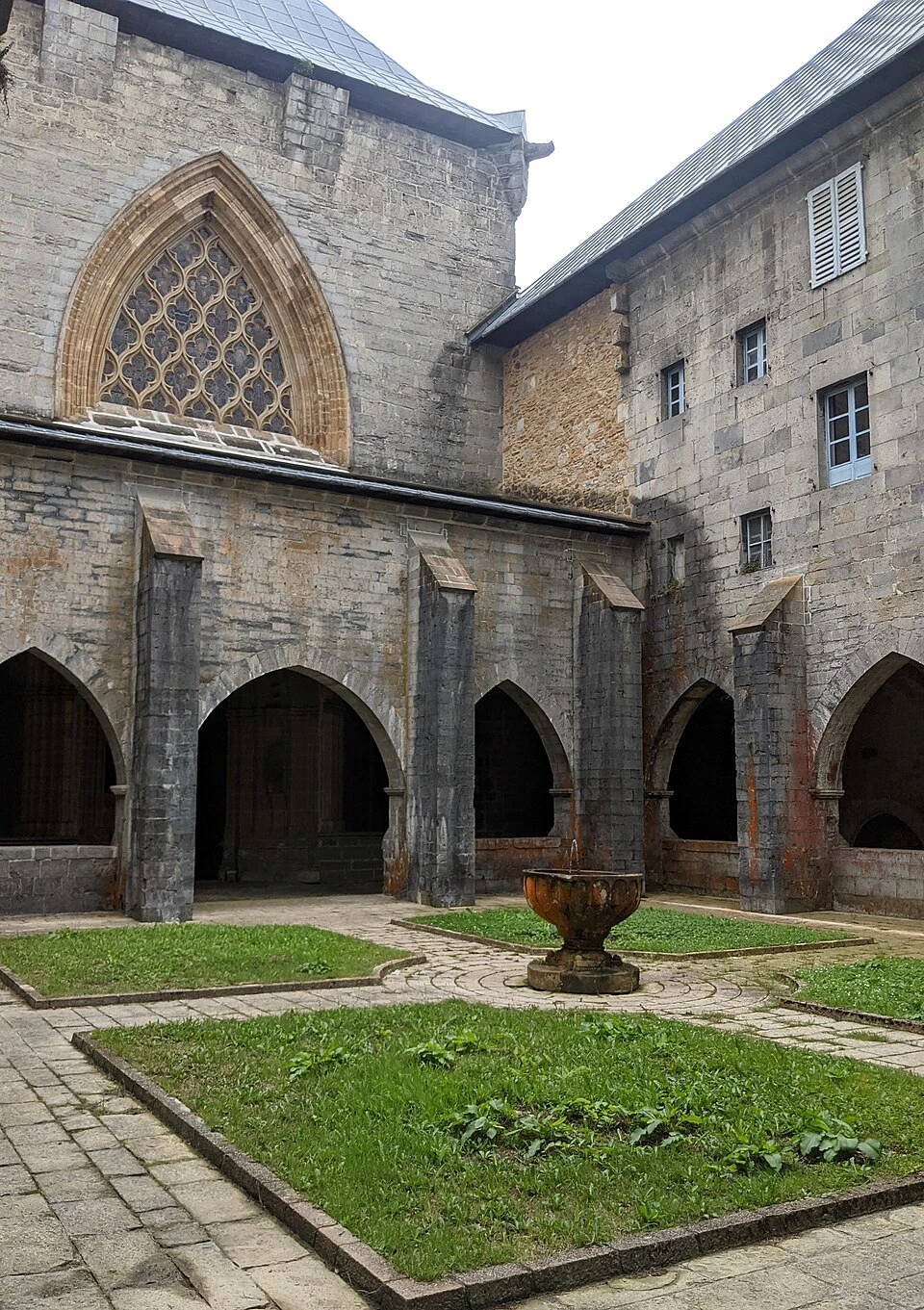
Royal Collegiate Church of Roncesvalles
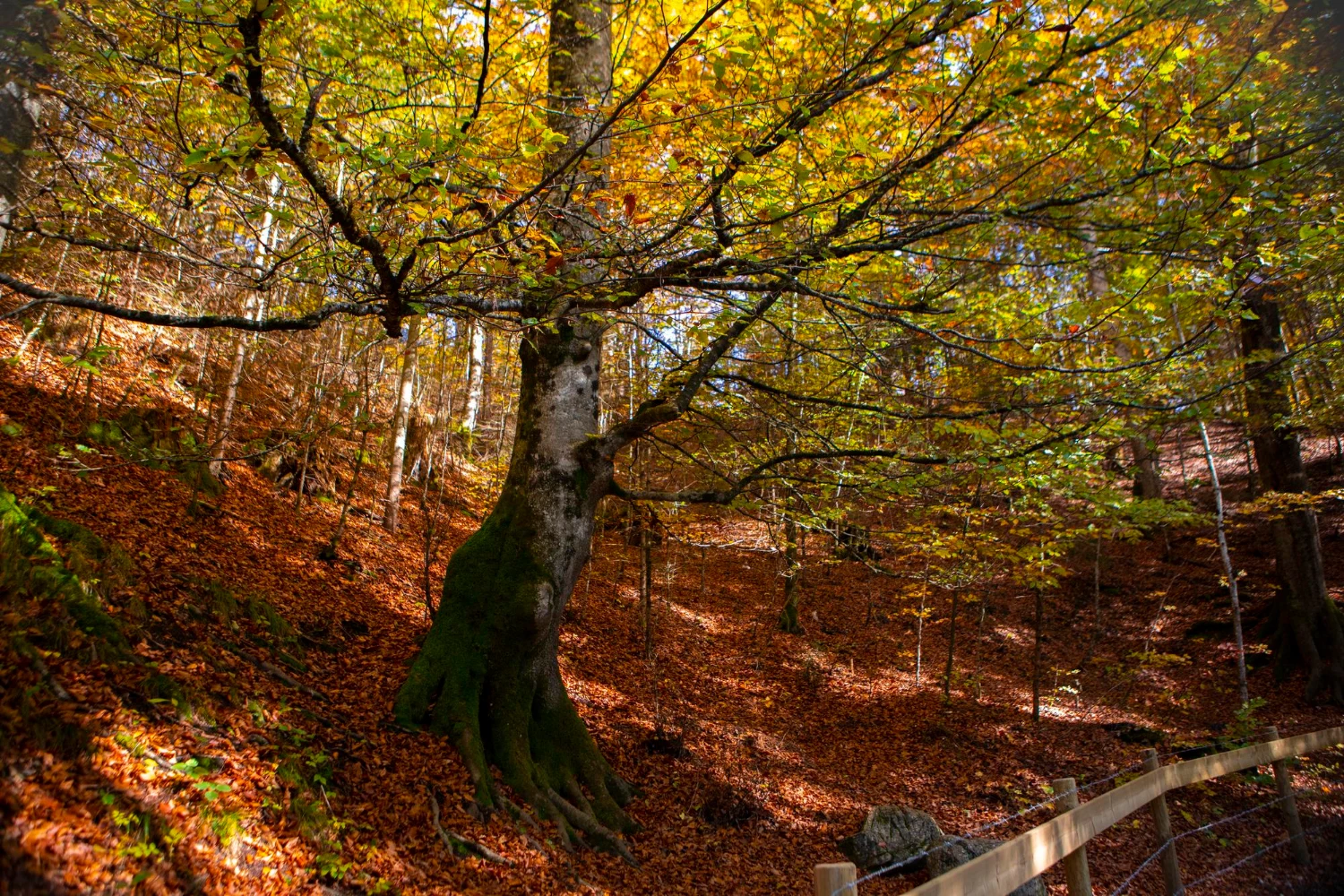
Sorginaritzaga Forest and White Cross
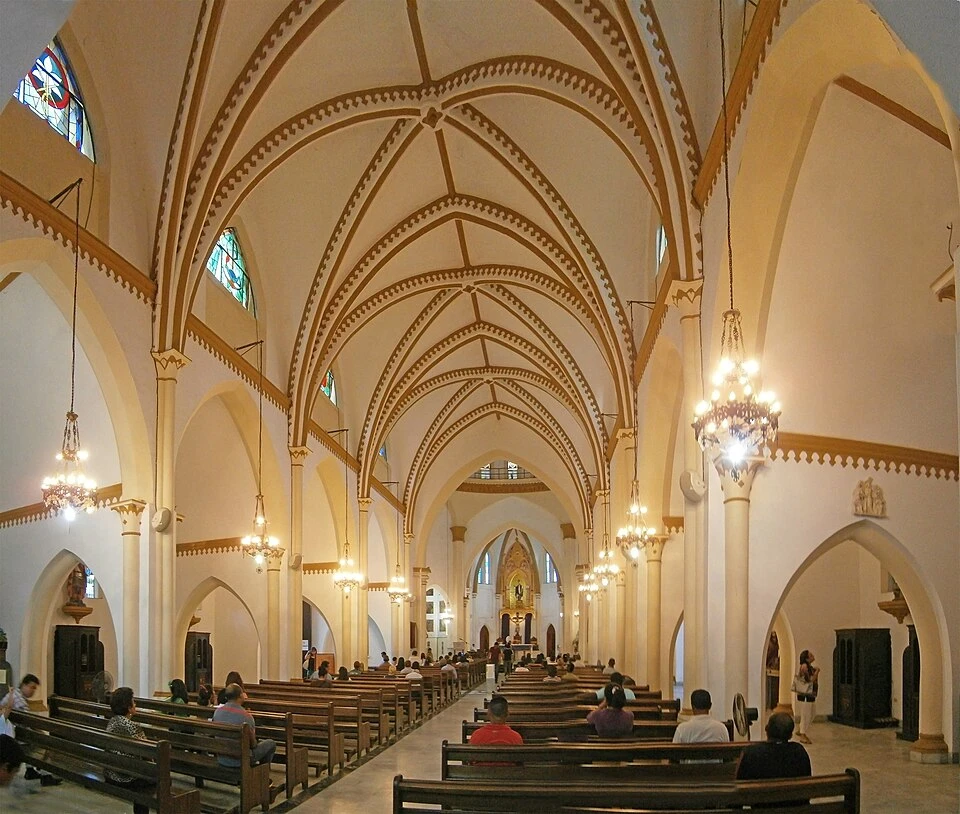
Church of San Nicolás de Bari, in Burguete
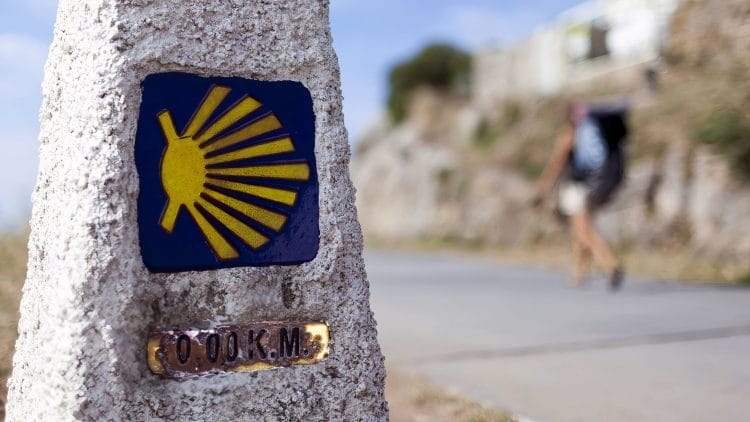
Espinal and Its Pyrenean Architecture
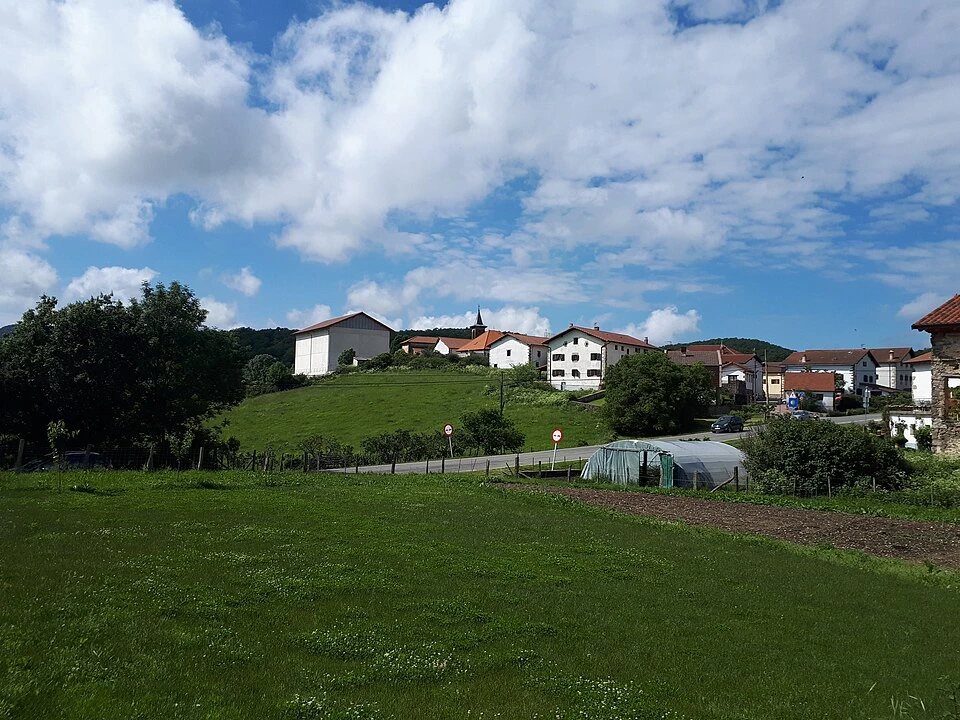
Church of San Pedro, in Bizkarreta-Gerendiain
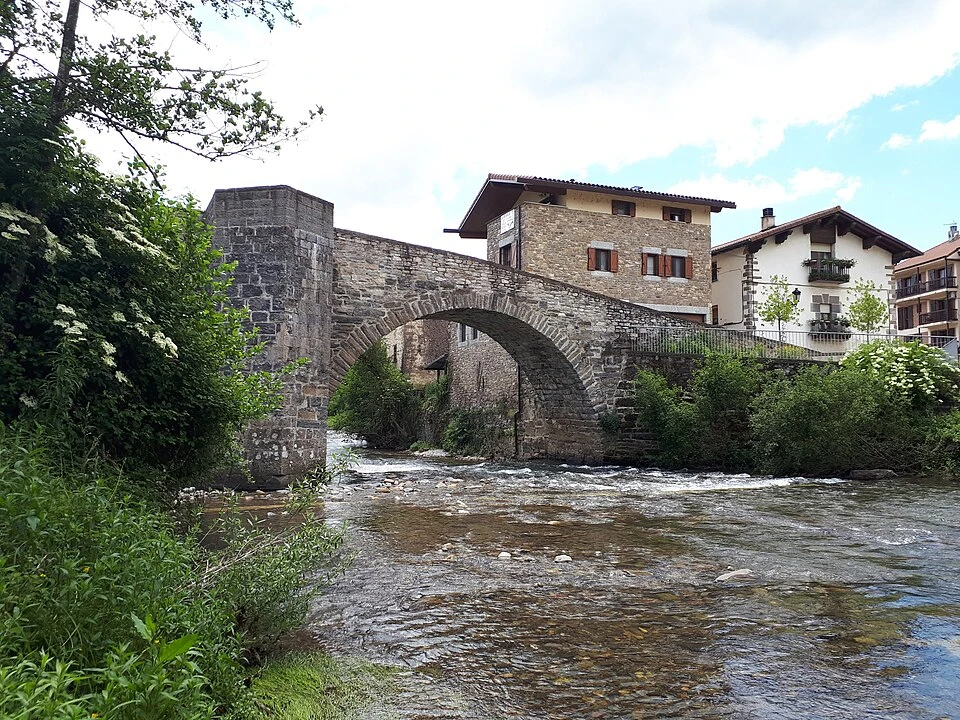
Bridge of the Madness, in Zubiri
Localities
Roncesvalles
Zubiri
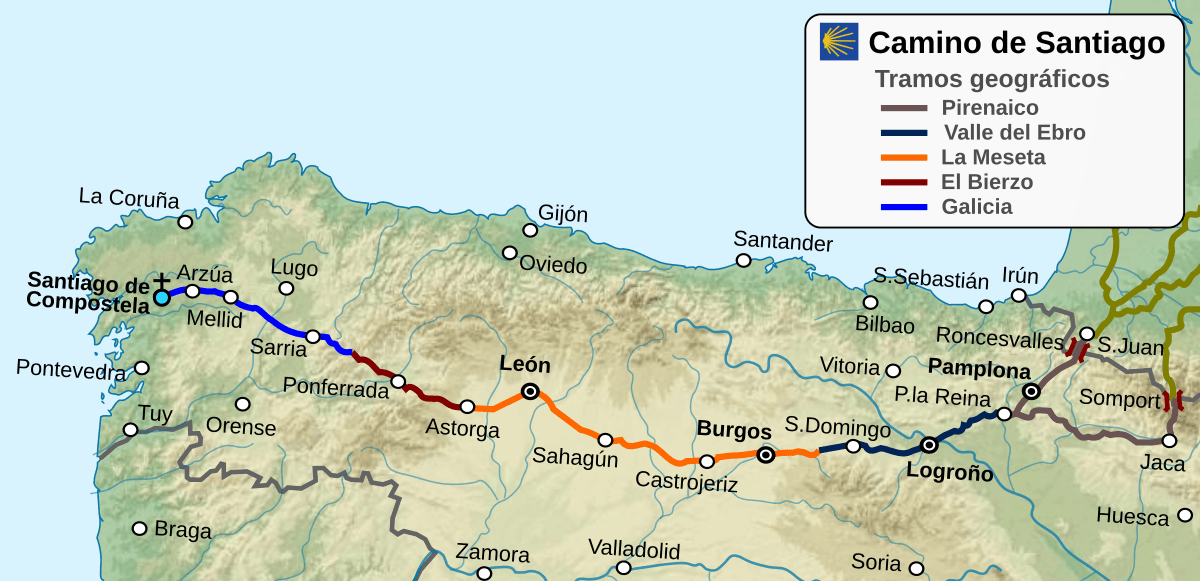
Route map
Ready to begin your journey?