
Zubiri
❯ Pamplona
20.4km
STAGE DISTANCE
Information
The stage between Zubiri and Pamplona is one of the most comfortable of the start of the French Way. It has an approximate distance of 20.4 km, an average time of 4 hours 30 minutes, and a profile with minimal elevation changes, so it usually functions as a relief day after the accumulated effort in the Pyrenees and the descent to Zubiri the previous day. The route accompanies the Arga River for a good part of the journey, alternating paths beside the riverbed, small villages in the Esteribar Valley, and, at the end, a long urban approach to the Navarrese capital.
It is a very rewarding stage for the pilgrim because it combines nature, heritage, and an arrival with significant Jacobean weight. The path crosses bridges, riparian forests, cobblestone roads, and small villages before flowing into Pamplona, which the City Council defines as the first major city of the Way after Roncesvalles. That condition has marked its history, urban planning, and character for centuries, to the point that the city itself links the development of medieval neighborhoods to the passage of pilgrims.
Furthermore, the end of the stage has a special appeal. Pamplona is not only a monumental city and very comfortable for an overnight stay, but also a place with its own identity within the French Way. Its entrance via the Magdalena Bridge and the Portal of France is one of the most beautiful of the Jacobean urban route. Added to this is the cultural pull of the city, internationally associated with San Fermín, Pamplona’s most emblematic festival, celebrated from July 6 to 14 and declared of International Tourist Interest.
Recommendation from The Way
Recommendation in stage 3: Zubiri - Pamplona
Although it is a simple stage in comparison with the previous ones, you should not be overconfident. There is a section of rapid descent toward the shore of the Arga before reaching Zuriain, and there are also some short passages along the road or beside the roadside where it is worth paying careful attention, especially in rain. In general, the terrain is friendly, but there are several changes in surface—cobblestone path, trail, track, and asphalt—that advise maintaining a regular pace and not lowering your guard in damp areas.
After Irotz it is important to pay close attention to the signage. There is a marked variant via riverside walk, but Consumer’s own guide warns that the historic route passes through Zabaldika, Arleta, and Trinidad de Arre, and recommends not skipping those enclaves because they are an important part of the history of the Way. For a page like this, it is worth highlighting that idea: it is not just about arriving earlier in Pamplona, but about covering the route with greater heritage and Jacobean content.
For those who want to extend the day, many pilgrims continue further in subsequent stages, but on this one in particular the most advisable is usually to stay in Pamplona and take advantage of the afternoon to rest, visit the old town, or enjoy local gastronomy. Gronze notes that some walkers even extend the stage to Cizur Menor, five kilometers after the center, although as a travel and cultural experience proposal, sleeping in Pamplona is usually the most complete option.
Stage profile
Short stage with gentle elevation changes, marked by the course of the Arga River and a very beautiful entry into Pamplona. The first half alternates bridges, forests, and small villages of the Esteribar Valley; the second leads, now in urban surroundings, to the Magdalena Bridge and the Portal of France, the historic access to the old town.
Itinerary
· Zubiri
The day starts in Zubiri, next to the famous Bridge of the Madness, and requires undoing a few meters of the end of the previous stage to cross it again. From there, the Way heads toward the industrial area of the locality and borders the Magna plant, a company linked to the magnesite geological deposit. After leaving that area behind, the route quickly recovers a cobblestone path and orients itself toward the river and the first villages of the valley.
Zubiri is a locality very linked to the Way. Turismo de Navarra defines it as the entrance to the Way in the Esteribar Valley and recalls that its name literally means “village of the bridge.” The medieval bridge that gives it its name, also known as the Bridge of the Madness, is one of its great symbols and the element that best summarizes the link between the village, the Arga, and the Jacobean tradition.
The main route does not enter Larrasoaña directly when arriving from Zubiri, because the locality is separated from the Way by the Arga River and by the so-called Bridge of the Bandits. Still, it is a very short detour and perfectly manageable for those who want to approach the village, have a drink, or see one of the traditional villages of the Esteribar Valley.
After that point, the Way begins a small climb toward Akerreta. It is a brief, pleasant, and very walkable section, with the Arga Valley accompanying on the right and a clear sense that the stage advances without excessive hardship.
Akerreta is one of the most pleasant localities of this day. In the upper part of the village stands the Church of the Transfiguration, which preserves medieval elements such as the tower, the doorway, and the baptismal font. After the hamlet, the Way crosses a small pass, crosses a local road, and enters one of the most beautiful sections of the day: a trail protected by trees and shrubs that descends to almost touch the shore of the Arga.
This section between Akerreta and Zuriain is one of the most rewarding of the entire stage. The trail narrows, the vegetation becomes denser, and the river becomes the great companion of the walker. It is a particularly photogenic part of the route and very representative of the humid Navarre at the start of the French Way.
The entrance to Zuriain is made by crossing a bridge over the Arga. From here, the stage changes slightly in rhythm because a small section next to the N-135 is linked and then the detour toward Ilurdotz is taken, crossing the river again to head toward Irotz. It is a simple segment, but it is important to walk carefully at the points where the Way comes closest to the road.
In Irotz there is another small milestone of the way: the Oven of Irotz, and shortly after the Church of San Pedro. From leaving the village you reach the bridge of Iturgaiz, of Romanesque origin and rehabilitated in the twentieth century. From here emerges the important decision of the day: follow the marked variant or maintain the historic route. Consumer is quite clear on this point and gives priority to the historic itinerary via Zabaldika, Arleta, and Trinidad de Arre.
The historic route heads toward Zabaldika, passes by the Church of San Esteban, crosses the area of the former lordship of Arleta, and then approaches the ring road of Pamplona via an underground passage. It is a somewhat less direct option than the riverside variant, but much richer from a heritage point of view.
The path then descends to the bridge of the Ultzama River and the hermitage of the Trinity of Arre, which still preserves its Romanesque apse. It is one of the most important enclaves of this stage and one of the great Jacobean milestones before entering Pamplona. Turismo de Navarra highlights here the rural Romanesque basilica of the twelfth and thirteenth centuries and the historic bridge associated with this place of pilgrim hospitality.
From Trinity of Arre, the Way runs down the Calle Mayor of Villava and connects shortly after with Burlada. From this point onward the stage loses almost all its rural character and transforms into an urban approach to Pamplona, although it still retains tree-lined walks and pleasant stretches for walking.
The entrance into Pamplona is one of the great moments of the day. The Magdalena Bridge constitutes the main gateway of the Way into the city, and from there the route ascends toward the Portal of France, the historic gate through which pilgrims enter the old town. The gate preserves its original structure and its drawbridge, and remains today one of the most symbolic places of the urban Jacobean route.
Once inside the city, the walker is already in the first major city of the French Way after Roncesvalles. The Pamplona City Council emphasizes that this condition has marked the history, urban planning, and character of the city for more than a thousand years. From here, the pilgrim can head toward the Cathedral area, Calle Compañía, Plaza del Castillo, or the rest of the historic center.
What to See
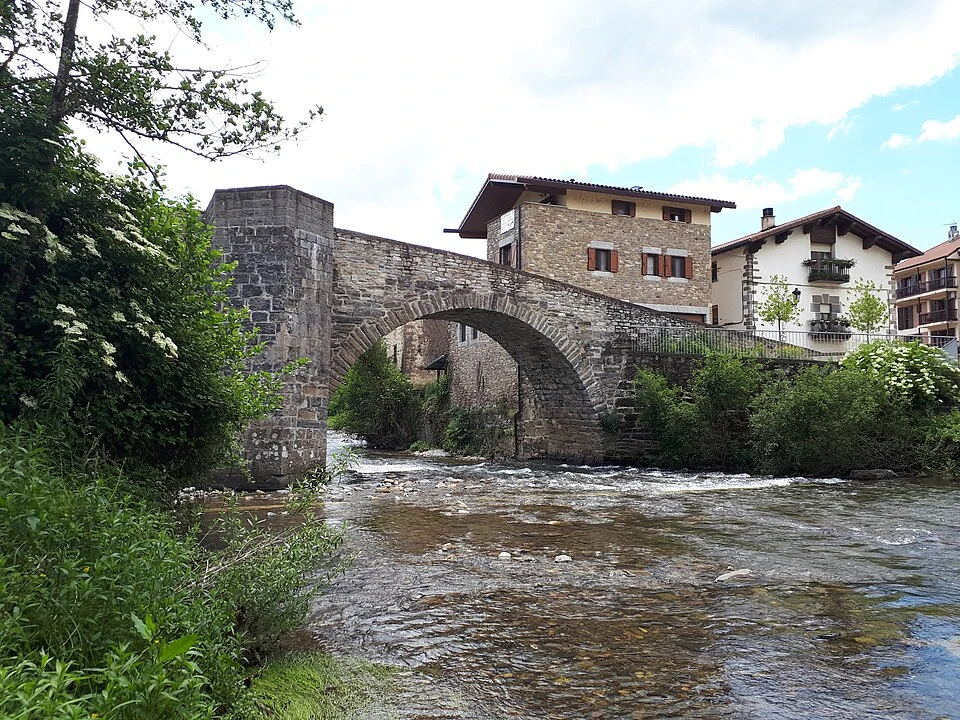
Bridge of the Madness, in Zubiri
Church of the Transfiguration, in Akerreta
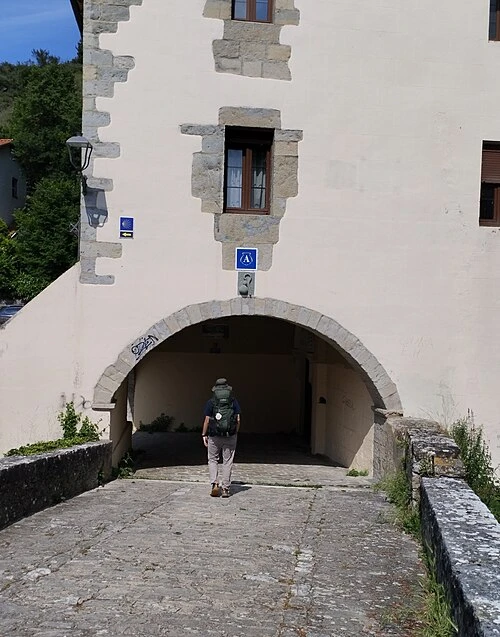
Trinity of Arre
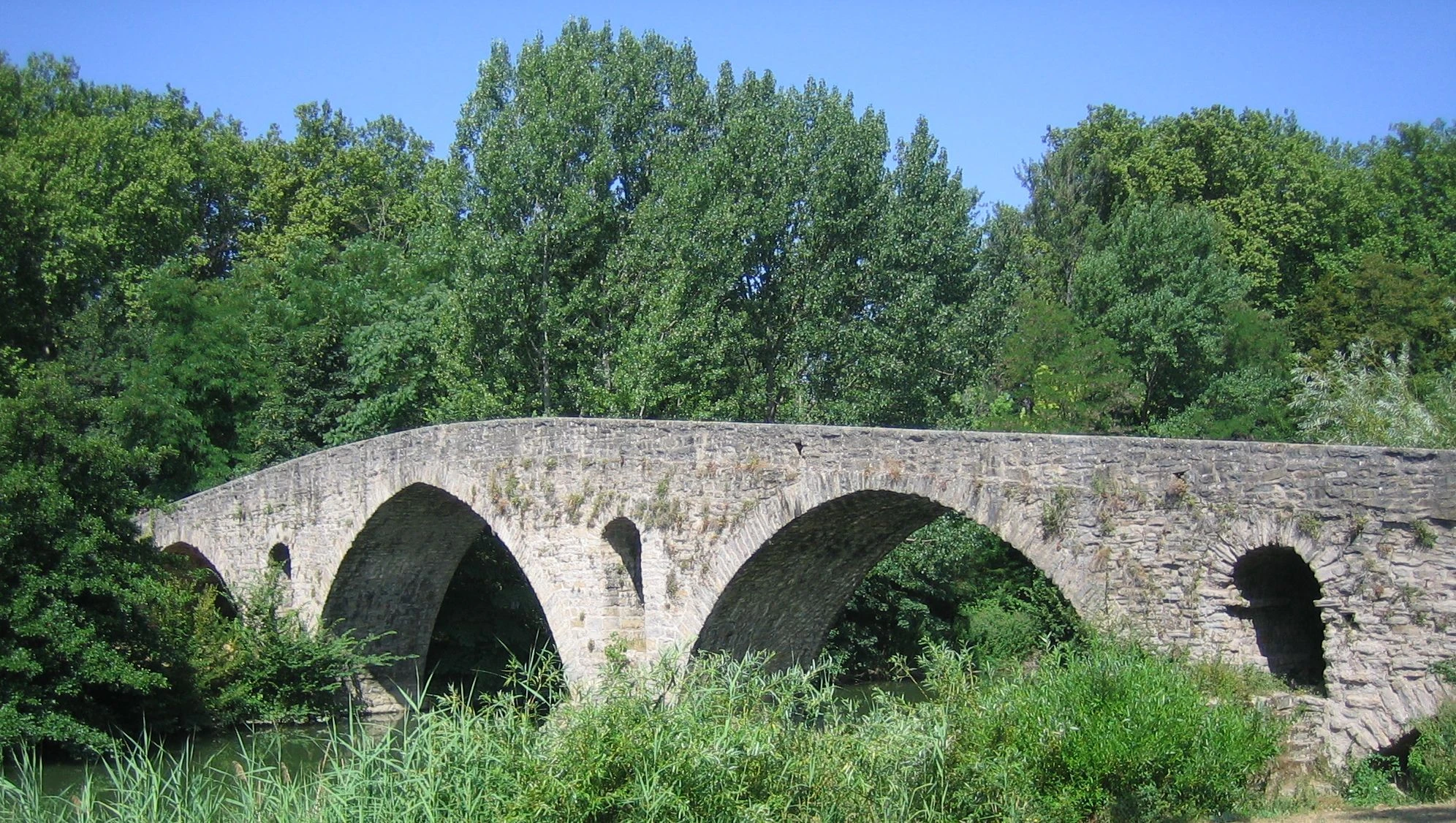
Magdalena Bridge
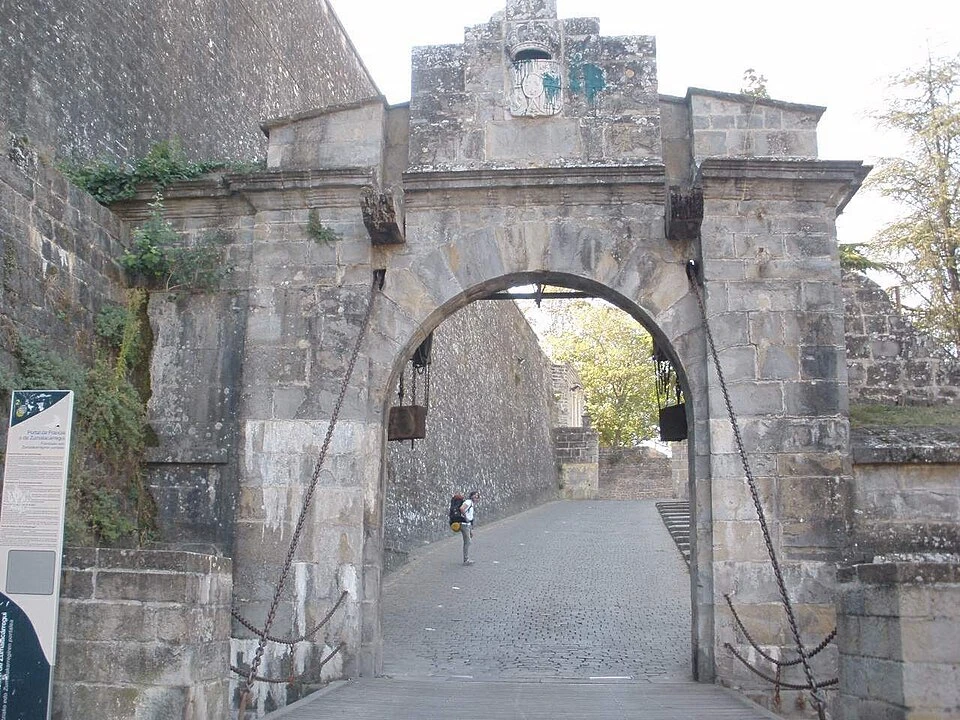
Portal of France
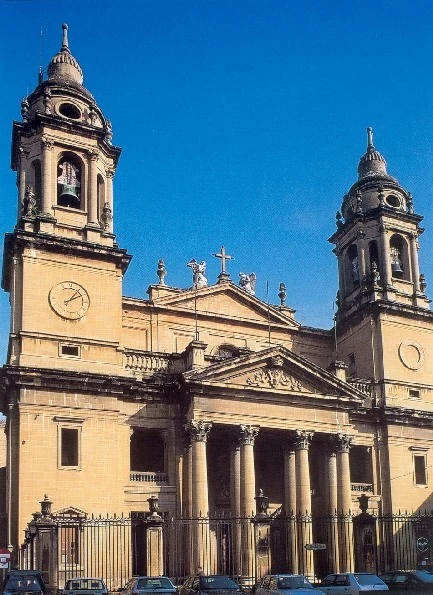
Cathedral of Santa María la Real
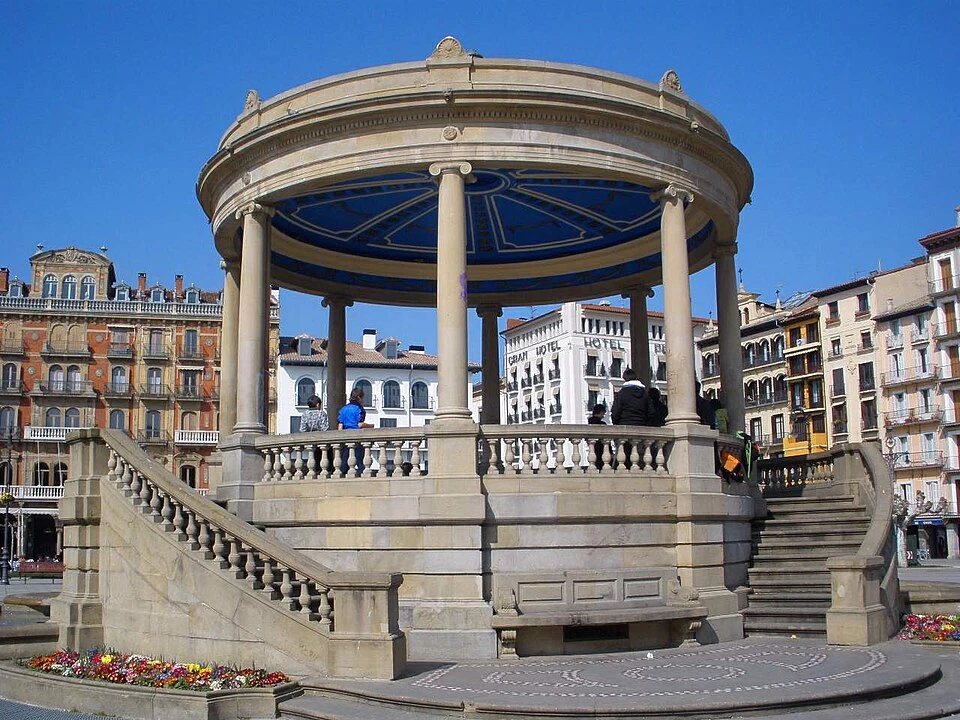
Plaza del Castillo
If you want to close the day with a very recognizable image of the city, Plaza del Castillo is the best place. The official tourism website defines it as the meeting point par excellence of Pamplona, with origins in the thirteenth century, surrounded by historic buildings, arcades, terraces, and intense urban life.
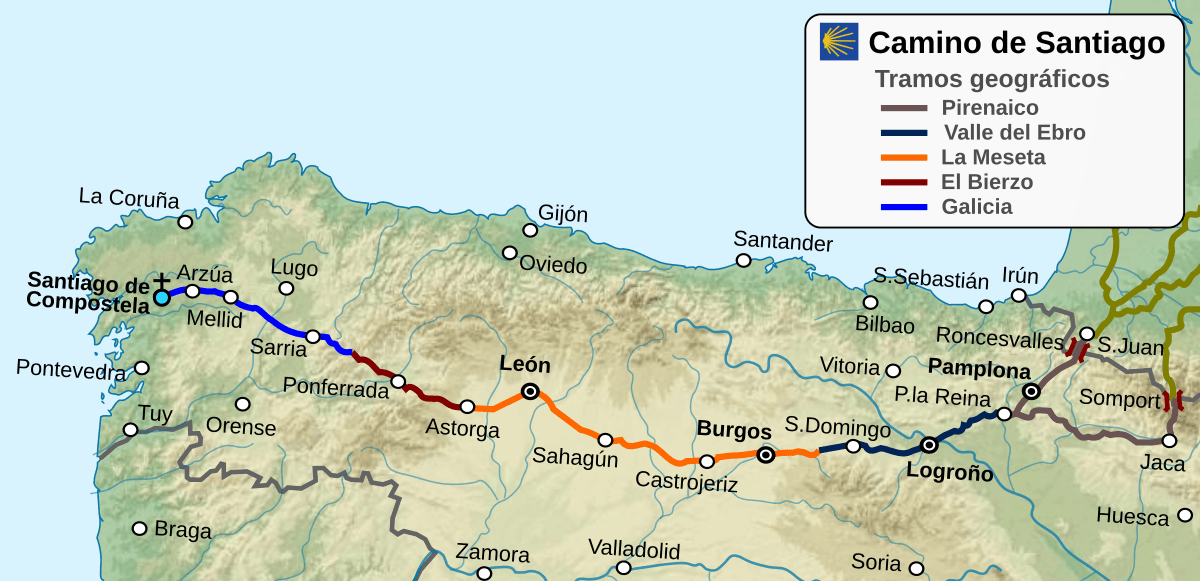
Route map
Ready to begin your journey?