
Los Arcos
❯ Logroño
27,5km
STAGE DISTANCE
Information
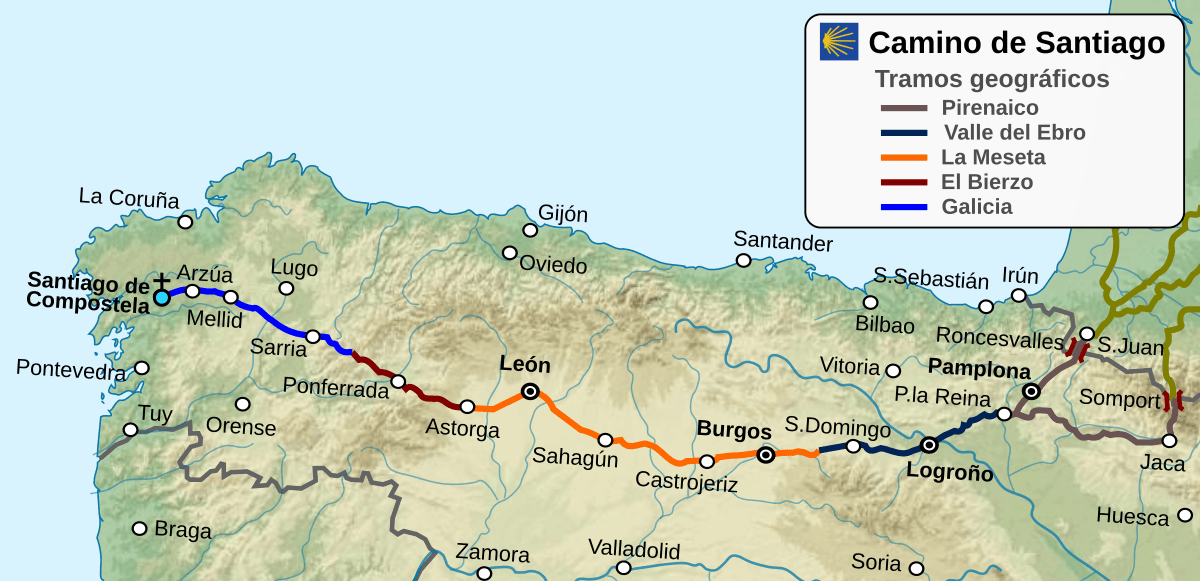
The stage between Los Arcos and Logroño marks an important change within the French Way: it is the day when you leave Navarre behind to enter La Rioja, following a route of approximately 27.6 km, with an average duration of around 6 hours 15 minutes and moderate difficulty. Gronze divides this stage very well into three parts: a first comfortable section from Los Arcos to Torres del Río, a second more broken sector between Torres del Río and Viana, and a friendlier final stretch between Viana and Logroño, already via tracks and pedestrian trails close to the city.
It is a long stage, but very complete. The landscape alternates open fields, gentle hills, ravines, dirt tracks, and passage through two localities with significant historical weight on the Way: Torres del Río and Viana. Furthermore, the entrance to Logroño has special symbolic value, because the pilgrim crosses the Ebro River for the first time, one of the great rivers of the Way, and accesses the La Rioja capital via the Stone Bridge, the traditional gateway to the Jacobean city.
It is also a stage of territorial and cultural transition. Turismo de Navarra defines Viana as “the last locality of the Way of Santiago in Navarre,” while La Rioja Turismo explains that the Way enters the autonomous community from that Navarrese locality, borders Cantabria Mountain, and heads toward the cemetery walls before entering Logroño via the bridge over the Ebro. That sequence gives the day a very clear personality: farewell to Navarre, entry into La Rioja, and arrival at a great city of the Way marked by history, wine, and hospitality.
Recommendation from The Way
Recommendation in stage 7: Los Arcos - Logroño
It is not a technically extreme stage, but it does demand attention. The section between Torres del Río and Viana concentrates the most uncomfortable slopes of the day, with climbing sections and descents where you must tread securely, especially if the terrain is wet. Gronze describes it as a stage with an intermediate section of more abrupt topography and some pronounced descents, something to keep in mind so as not to start too hard from Los Arcos.
For those finishing the previous stage in Torres del Río, this day changes quite a bit, because the distance is reduced and the first more gentle kilometers are eliminated. Still, the section toward Viana remains the most demanding of the day. By bike or with rain, it is worth being extra cautious in the gravel and loose earth areas.
On a practical level, this is a very good day to manage effort with sense: advance comfortably to Torres del Río, conserve energy for the climbing sections toward Viana, and once there, enjoy a more manageable arrival to Logroño. Already in the La Rioja capital, the reward compensates: old town, Jacobean atmosphere, gastronomy, and a very rewarding stage ending.
Stage profile
Itinerary
· Los Arcos
The stage departs from Los Arcos, crossing the locality along its historic axis. The City Council recalls that the Jacobean Route runs along Calle Mayor, where hostels, pilgrim hospitals, and merchant houses were developed, which explains why the town continues to be considered a clear way-village and stage ending. From there, the itinerary abandons the population, crosses the Odrón River, and advances via dirt tracks parallel to the road.
The first kilometers are relatively comfortable. The terrain allows walking at a good pace and serves as a warm-up before the more active section of the day. On clear days, the open and agricultural landscape helps perceive that transition between the more western Tierra Estella and proximity to the La Rioja border.
· Sansol
The Way reaches Sansol after a simple journey between tracks and open terrain. It is a small Way village with services for pilgrims and a good place for a brief pause before continuing toward Torres del Río. Although it is less monumental than other villages on the stage, its role is important within the day’s rhythm, because it marks the end of the easiest section.
From Sansol, the route crosses the road again and begins to string together more serious climbs and descents. The proximity of Torres del Río should not be deceiving: from there the topography clearly changes.
· Torres del Río
Torres del Río is one of the great milestones of the day. Its most famous element is the Church of the Holy Sepulcher, which Turismo de Navarra defines as a beautiful specimen of twelfth-century Romanesque, with an octagonal floor plan, related to the Way of Santiago and used as a funeral chapel and beacon of the Way, thanks to the light lit in the lantern that crowned the building. According to the same source, it was constructed around 1160–1170 and its interior vault of interlaced ribs is one of its most impressive features.
The locality, small but very significant, also functions as one of the most common alternative stage endings. Its position before the most demanding section toward Viana explains why many pilgrims decide to sleep here to better distribute effort between two days.
From Torres del Río begins the most active part of the day. The path ascends to the high area of the village, crosses the surroundings of the road several times, and passes through the area of the hermitage of the Virgin of Poyo, one of the traditional points of the route before Viana. Then comes the descent toward the barranco of Mataburros, a well-known name within this stage that quite well reflects the sensation of the terrain: climbing sections, changes in grade, and descents where it is important to walk carefully.
This sector concentrates the physical demands of the day. It is not high mountain, but rather a section of uncomfortable and non-uniform topography. Still, the reward is visual: the pilgrim begins to glimpse Viana in the distance, although, as the City Council of the locality reminds us, that final approach can be misleading because the city seems close and takes longer than expected to reach.
· Viana
The entrance to Viana has great Jacobean personality. Turismo de Navarra presents it as the last locality of the Navarrese Way, located just 8 km from Logroño, and highlights its past as a defensive stronghold, its walls, manor houses, and churches from the sixteenth to eighteenth centuries. The City Council adds that the Way traditionally enters from the area of the Trinidad Gate, crosses the Plaza del Coso, Calle Mayor, the Church of Santa María, and reaches the Plaza de los Fueros, where today the tourist office is also located under the arcades of the town hall.
On a monumental level, Santa María of Viana is its great reference point. Turismo de Navarra notes that it is an important building constructed between 1250 and 1312, reformed in later centuries, with a Gothic structure of three naves, a doorway from the fourteenth century, and an important main altarpiece from the seventeenth century. It is a very recommendable visit if you enter via the historic center, as most pilgrims do.
From Viana onward, the Way becomes much friendlier. La Rioja Turismo explains that the route enters the La Rioja autonomous community from the Navarrese locality, borders Cantabria Mountain, and arrives at the walls of the municipal cemetery before accessing the city. Visita Logroño adds that the pilgrim approaches Logroño precisely by descending from Cantabria Mountain, today converted into an excellent viewpoint over the city, and enters the San Antonio district with the view already set on the bridge over the Ebro.
This final section mixes asphalt tracks, pedestrian trails, and peri-urban accesses, with the advantage that the physical effort decreases considerably. The change of autonomous community and the vision of Logroño in the distance also give a clear sense of progress within the Way.
· Logroño
The entrance into Logroño is via the Stone Bridge, also called the San Juan de Ortega Bridge. La Rioja Turismo notes that the current bridge was designed by Fermín Manso de Zúñiga and inaugurated in 1884, is 198 meters long, and has seven arches; Spain.info adds that it is one of the symbols of the city and the place of entry of the Way of Santiago into Logroño. Visita Logroño also recalls that, before crossing it, the old custom houses from the nineteenth century were converted into a pilgrim information office.
Already inside the city, Logroño presents itself as the first major city of the Way in La Rioja. The official tourism website of the city emphasizes that the passage of pilgrims favored for centuries the commercial, hospitality, and cultural development of Logroño, and that this hospitable spirit remains alive in its streets, plazas, and services.
What to See
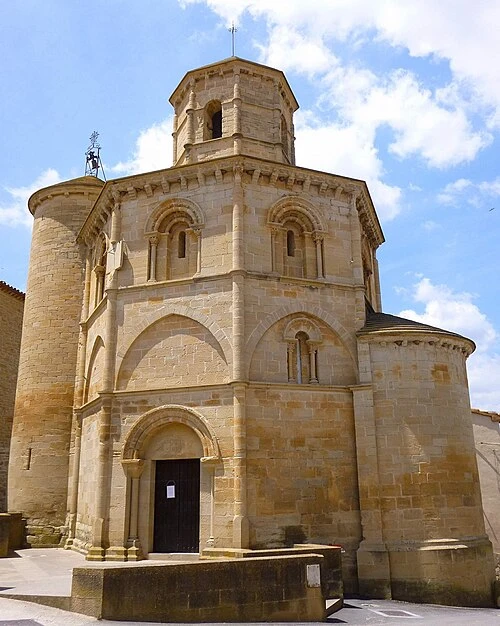
Church of the Holy Sepulcher, in Torres del Río
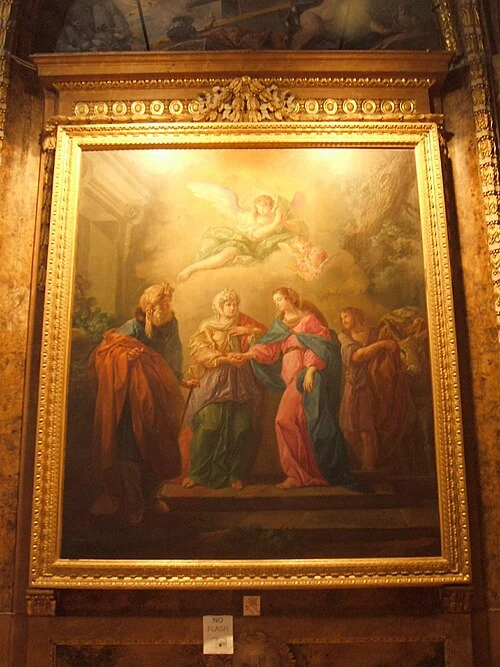
Viana and the Church of Santa María
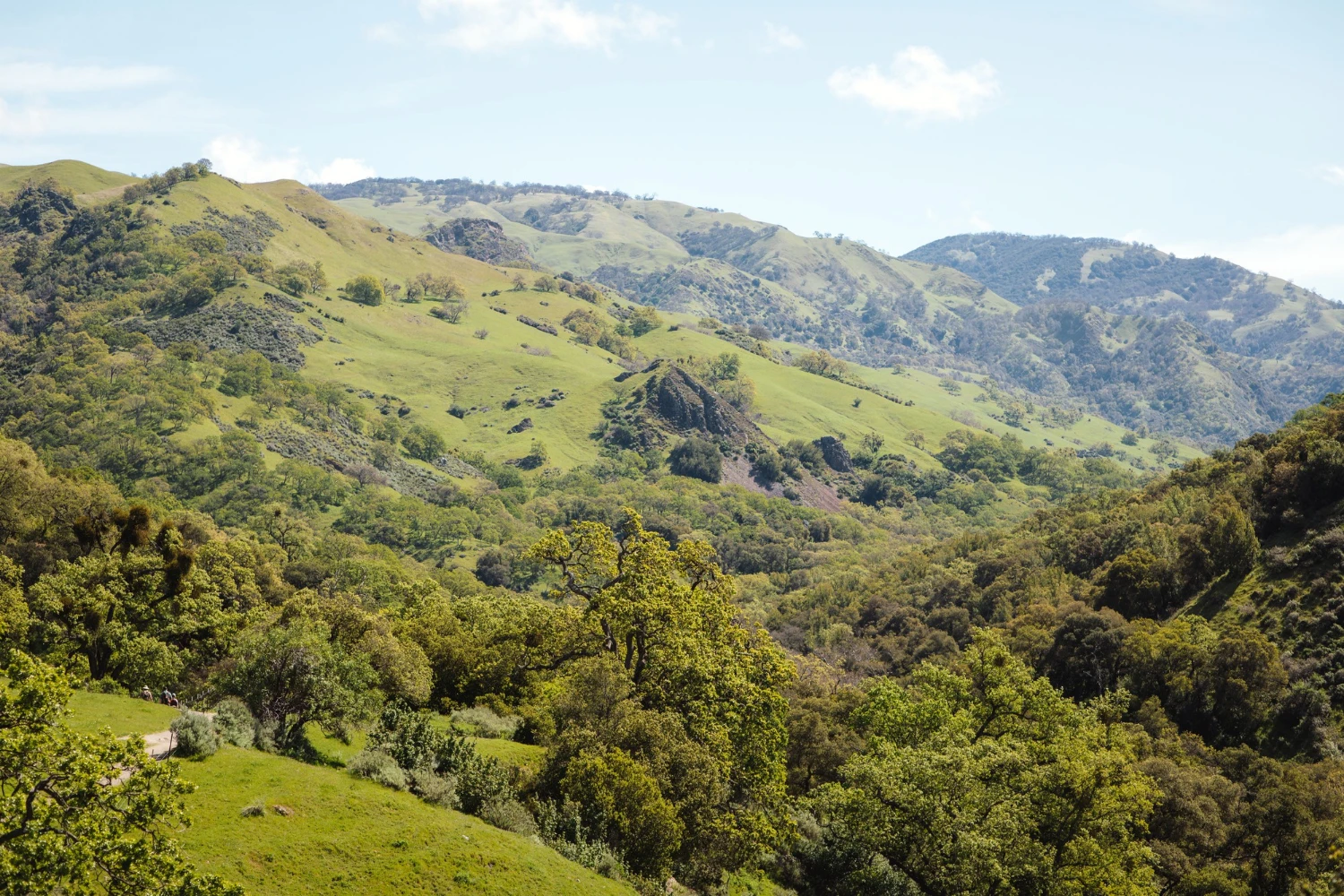
Cantabria Mountain
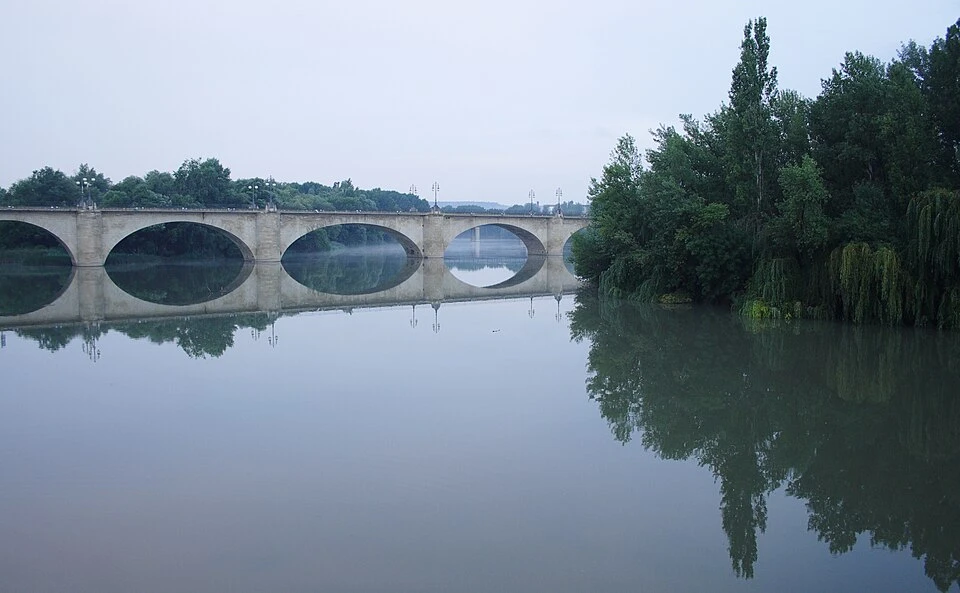
Stone Bridge, in Logroño
It is the great Jacobean gate of access to the city. La Rioja Turismo and Spain.info agree in noting that the current bridge dates to 1884, is also known as the San Juan de Ortega Bridge, and constitutes one of the most recognizable symbols of Logroño, as well as the traditional passage of the Way over the Ebro.
Route map
Ready to begin your journey?