
Estella
❯ Los Arcos
21.4km
STAGE DISTANCE
Information
The stage between Estella-Lizarra and Los Arcos has an approximate distance of 21.3 km, an average duration of about 5 hours, and a generally friendly profile, with moderate elevation changes and long comfortable tracks for walking. Gronze presents it as a placid day within the French Way, although he warns that the section between Villamayor de Monjardín and Los Arcos offers almost no shade, something important if you walk in summer or on very hot days.
It is a very rewarding stage because it combines several landscapes in just over twenty kilometers. You leave the monumental city of Estella, pass through the wine-growing area of Ayegui and Irache, cross areas of oak scrubland, vineyards, crops, and open tracks, and then enter a drier and quieter section before arriving in Los Arcos. Turismo de Navarra summarizes that change very well: after leaving the Irache area behind, the route links vineyards, cereal fields, small woods, and ravines before emptying into Calle Mayor of Los Arcos.
On the Jacobean level, this stage has two very marked milestones. The first is the Monastery of Irache, one of the great monumental ensembles of the Way in Navarre and an ancient pilgrim hospital. The second is the Wine Fountain, one of the best-known and most photographed places of this part of the route. Between the two, the stage gains a strong heritage component that differentiates it from other transition days more focused solely on landscape.
Recommendation from The Way
Recommendation in stage 6: Estella - Los Arcos
It is not a hard stage, but you should manage water and supplies well. Gronze warns especially of the section between Villamayor de Monjardín and Los Arcos, where shade is scarce and the sense of exposure increases considerably in the warm months. That’s why, even though the profile is comfortable overall, it is a day when it is worth setting out with sufficient water and not becoming overconfident just because of the distance.
It is also important to keep in mind that from Ayegui several options open up. Turismo de Navarra indicates that from there you can follow toward Azqueta by the main route or approach the Monastery of Irache and, later on, reconnect with the traditional route or take the Montejurra and Luquin variant before rejoining toward Los Arcos. For a stage page, the best approach is to make clear that the classic and most common variant for foot pilgrims is the one that passes through Azqueta and Villamayor de Monjardín.
And if the pilgrim prefers to extend the day, Torres del Río is a very common option. Gronze notes that both Los Arcos and Torres del Río function as frequent stage endings: Los Arcos offers more services, while Torres del Río allows you to shorten the next day toward Logroño.
Stage profile
Itinerary
· Estella
The stage starts in Estella-Lizarra, a medieval city born under the protection of the Way of Santiago. The official website of Turismo de Navarra defines it as a city “that emerged by and for the Way,” with very important heritage and commercial value within the Jacobean route. The traditional pilgrim departure leaves behind the historic center and heads toward the Rocamador area, the Logroño road, and the peripheral surroundings that lead to Ayegui.
Although the initial section is more urban than the rest of the day, it has interest because it directly connects with one of Estella’s historic exits toward the west. The city atmosphere quickly disappears and the path begins to orient itself toward the agricultural landscape that will dominate much of the day.
· Ayegui
Shortly thereafter you reach Ayegui, a small locality on the outskirts of Estella. From here, according to Turismo de Navarra, the pilgrim can choose to continue toward Azqueta by the main route or first approach the Monastery of Irache. It is an important point because it marks access to one of the most representative visits of the entire stage.
Ayegui is moreover intimately linked to Irache. The official portal of Turismo de Navarra places the monastery in its municipal area, sheltered by Montejurra and surrounded by vineyards, which helps understand the landscape that begins to impose itself from this point of the route.
The Monastery of Irache is one of the great milestones of the French Way in Navarre. The official website of Turismo de Navarra describes it as a great complex of medieval, Renaissance, and Baroque buildings, built in the vicinity of Estella, and recalls that the Benedictines began constructing it in the second half of the eleventh century over another earlier monastery from the eighth century. Furthermore, it emphasizes its historical significance: it was a pilgrim hospital, university, war hospital, and religious college, and came to be the first pilgrim hospital in Navarre.
Next to the monastery is the famous Wine Fountain of Bodegas Irache. The winery explains on its official website that the fountain has two spouts, one for water and one for wine, and is the only wine fountain on the entire Way. It also adds that each day it is filled with about 100 liters of young red wine as a tribute to the pilgrim. It is, without a doubt, one of the most curious and memorable stops of this stage.
· Azqueta
Azqueta is a small Way village, more discreet than other villages on the stage, but important as a prelude to Villamayor de Monjardín. Gronze, moreover, reflects it as a point where accommodation options still exist right beside the path, which confirms its role as a real stop within the itinerary.
Leaving the village, the terrain descends slightly and passes beside a dairy farm. From there, according to Turismo de Navarra, the track becomes a trail at times and leads to the so-called Moorish fountain, before entering the nucleus of Villamayor de Monjardín.
The climb to Villamayor de Monjardín is the clearest effort of the stage. Once in the village, one of its great attractions is the Church of San Andrés, which Turismo Tierra Estella defines as an example of rural Navarrese Romanesque with advances toward proto-Gothic, widely diffused in the second half of the twelfth century. It is one of the most interesting temples of this entire section of the Way.
Villamayor also has another great point of interest at elevation: the Castle of San Esteban de Deyo, also known as Monjardín Castle. Turismo Tierra Estella highlights the remains of the castle of the Banu Qasi, the hermitage of San Esteban and its cistern, while Turismo de Navarra notes that the castle is today partially in ruins but open, with extensive panoramas over the surroundings.
After leaving Villamayor de Monjardín behind, the stage changes tone. Turismo de Navarra describes a route along gravel tracks, vineyards, cereal fields, scattered pines, almond trees, and small streams, with several ninety-degree turns and a growing sense of spaciousness and exposure. It is a very representative section of western central Navarre, sober, open, and silent.
In the final part, the path narrows somewhat as it crosses the ravine of the Gardiel stream, between tamarisks, rushes, and reeds, before recovering the wide track and finally entering Los Arcos among cereal and olive plots. It is a beautiful and progressive ending, although it can become somewhat long if the heat intensifies.
The stage ends in Los Arcos, a locality historically very linked to the Way of Santiago. Turismo de Navarra describes it as an emblematic town of the Way, crossed by the Odrón River, where Calle Mayor historically organized hostels, pilgrim hospitals, merchant houses, and noble buildings. In fact, the same source recalls that it came to have three pilgrim hospitals and continues to function today as a milestone and stage ending.
The arrival in Los Arcos is very rewarding because the locality concentrates quite a bit of pilgrim life and good services for the pilgrim. Gronze highlights it as the most complete stage ending compared to Torres del Río, and the City Council and Turismo de Navarra reinforce that idea by presenting it as an authentic “way-village.”
What to See
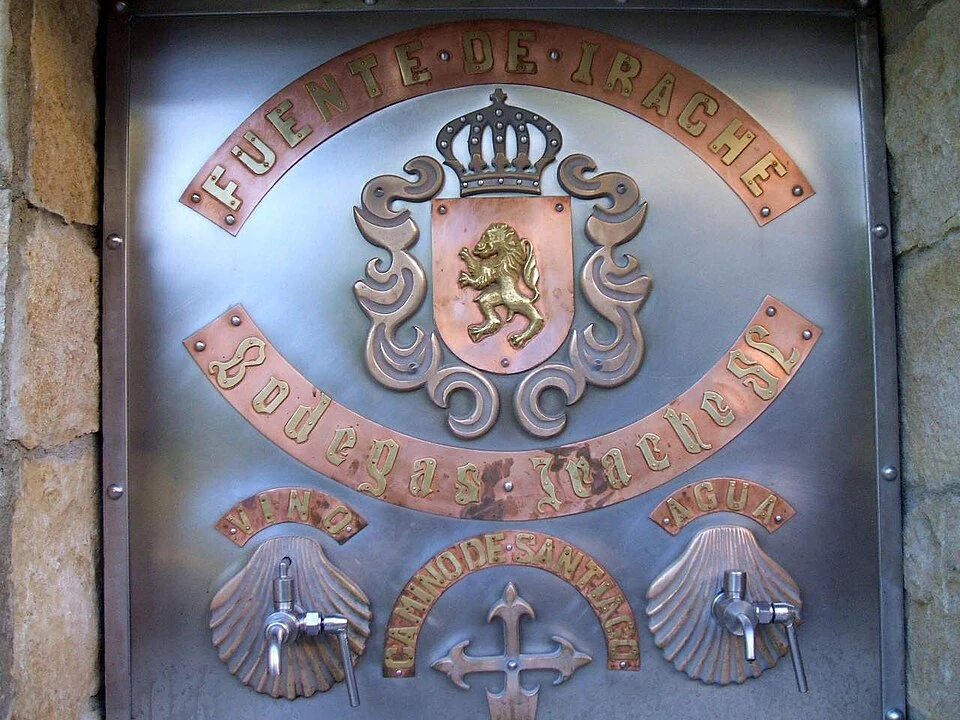
Wine Fountain
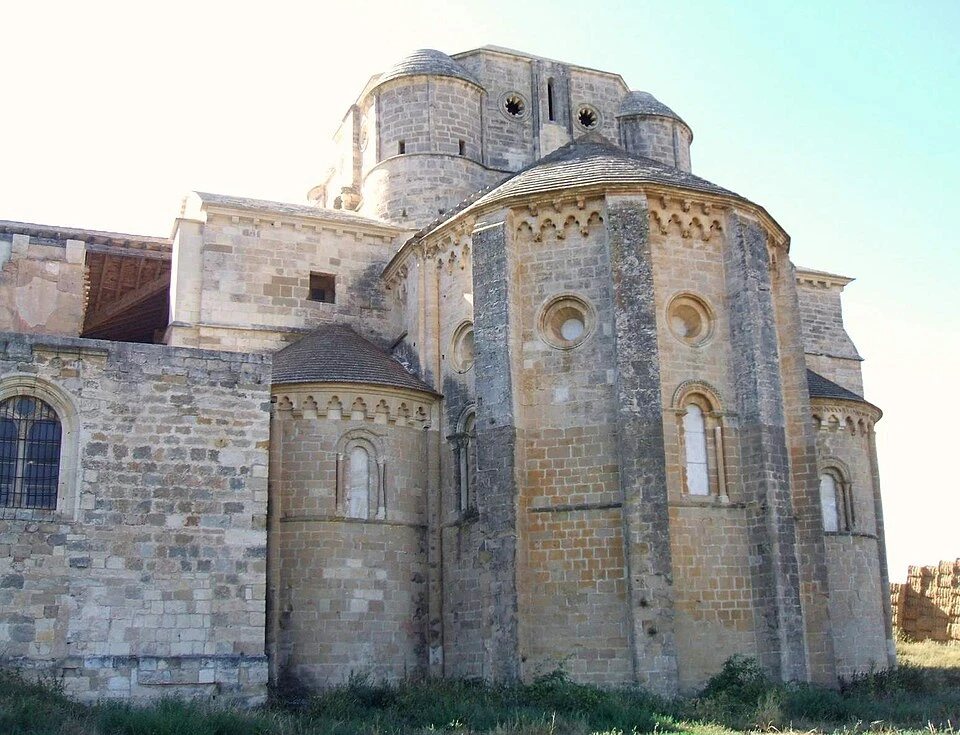
Monastery of Irache
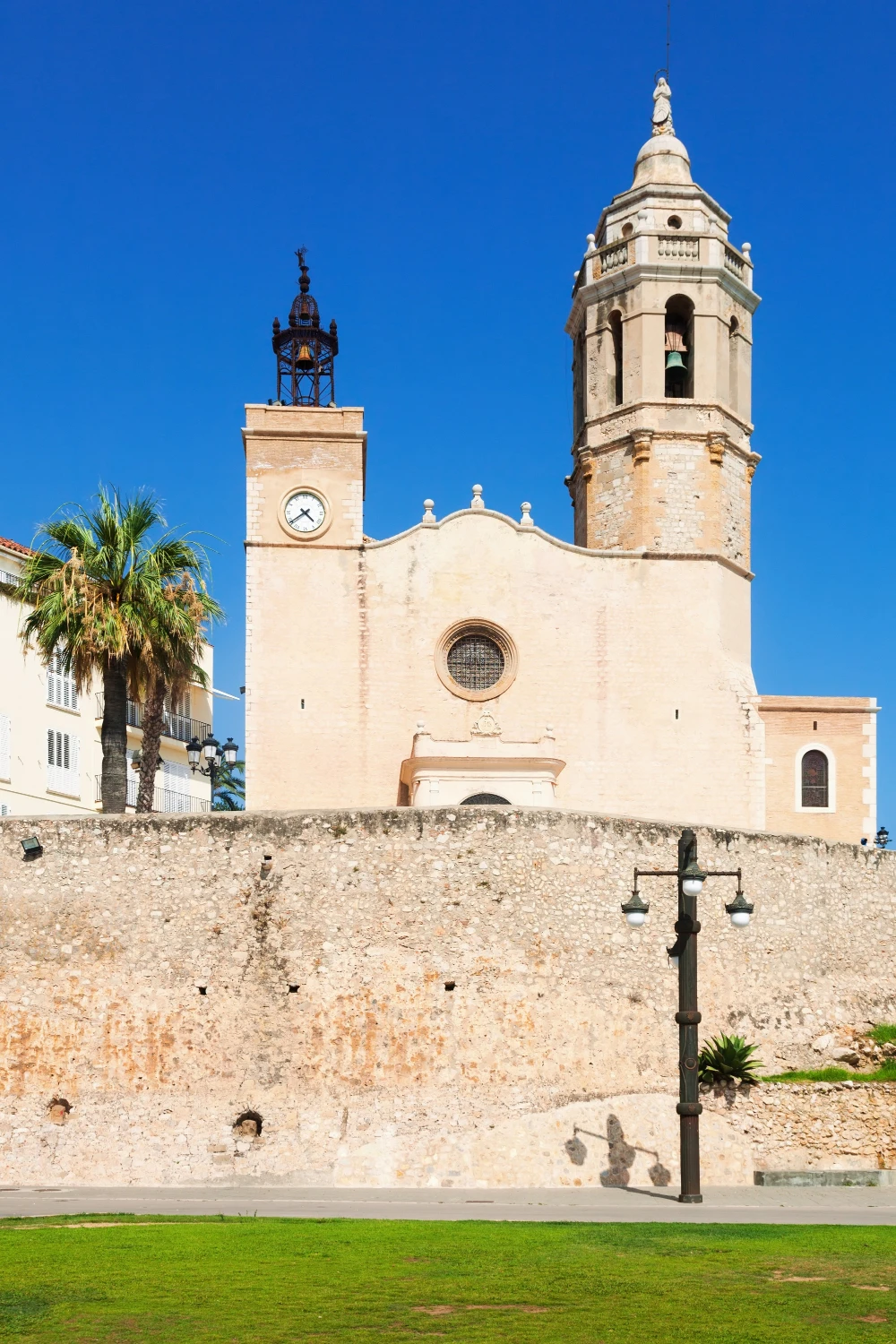
Church of San Andrés of Villamayor de Monjardín
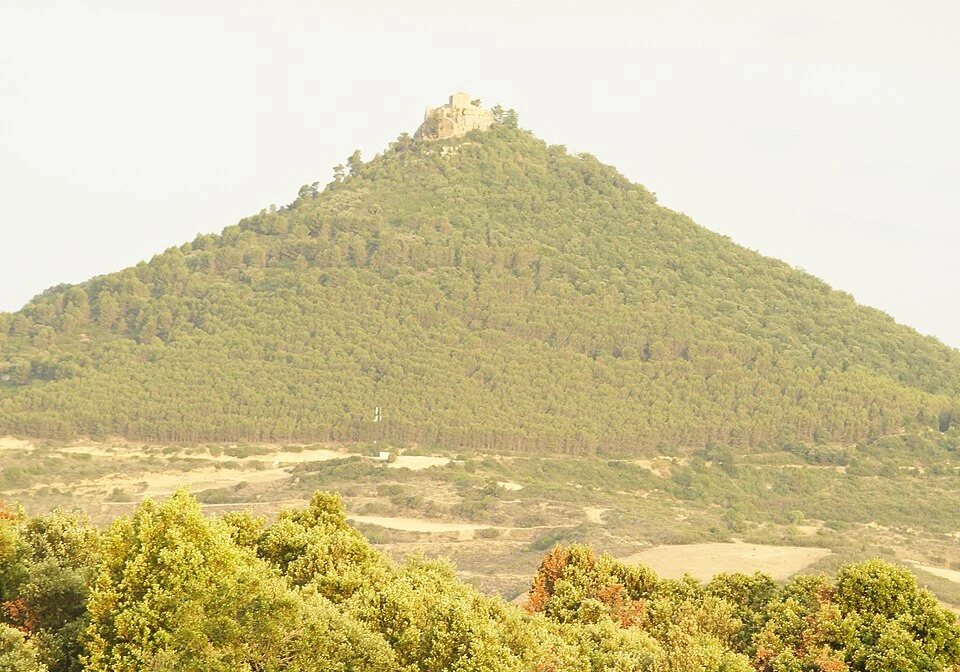
Castle of San Esteban de Deyo
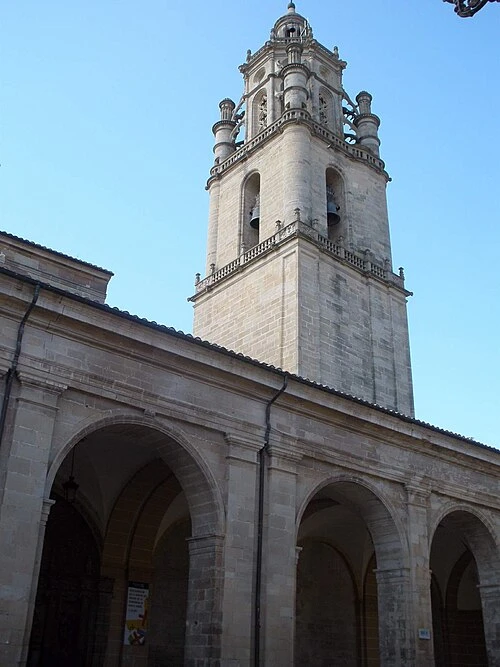
Church of Santa María of Los Arcos
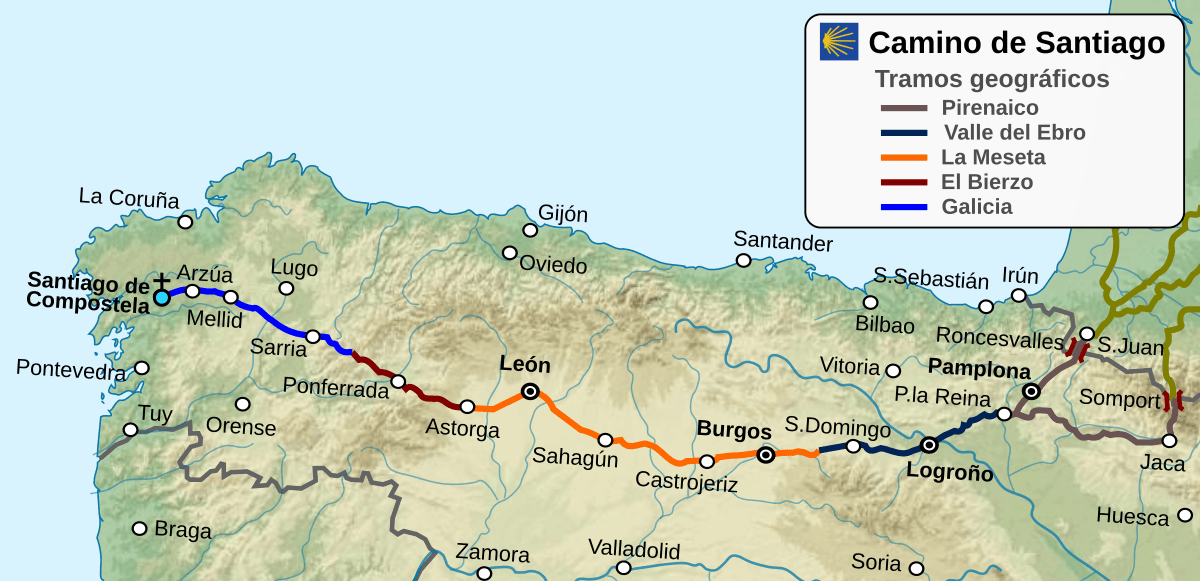
Route map
Ready to begin your journey?