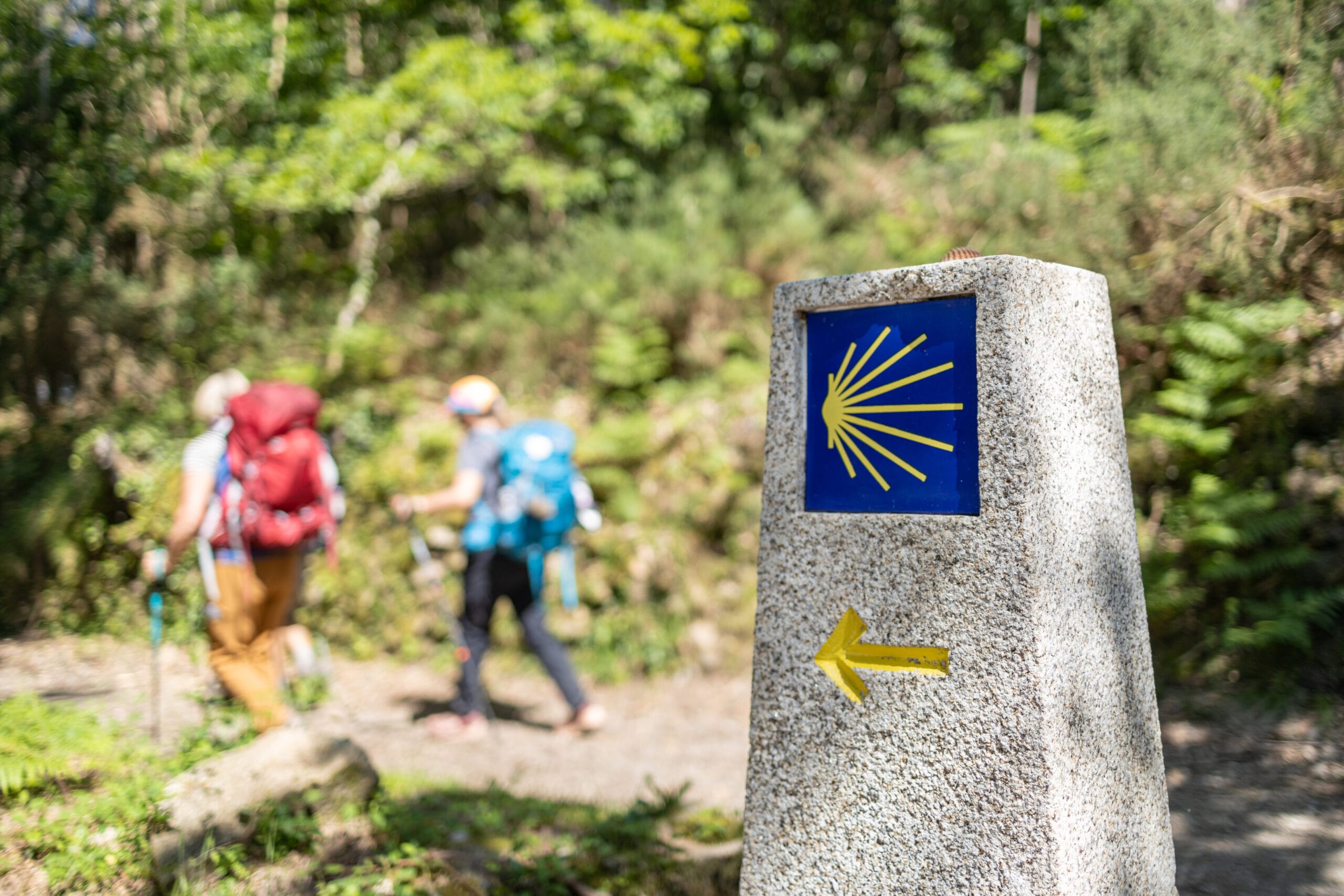
Walking the Camino de Santiago with a dog is possible and, for many pilgrims, it’s the best way to experience it: hours outdoors surrounded by nature, with a companion who never complains about the hills. However, it requires different preparation, as you’ll need to plan things like where to sleep and how to deal with the heat more carefully.
If you’re thinking about walking the Camino de Santiago with your dog, here’s a complete guide with everything you need to know before you set off. That way, all you’ll have to worry about is enjoying the route.
What you need to know
First of all, it’s important to know that no section of the Camino de Santiago is off-limits to dogs, and it’s becoming more and more common to see them on the trail. What changes compared to walking without a pet comes down to three things. The first is accommodation, since public albergues don’t usually accept pets or take bookings, so you’ll need to stay in private accommodation. The second is logistics, because getting to the starting point and back home with a dog takes more planning. And the third is daily care, which requires paying special attention to their paws.
Things to consider if you want to bring your dog
Not every dog is ready to walk dozens of kilometers day after day, and knowing their limits is part of looking after them. To find out whether your pet is ready for this experience, you should consider:
- Your dog’s characteristics. Ideally, your dog should be an adult, healthy and fully developed. If your pet is still a puppy or is older, check with your vet first. Breed and size also matter: brachycephalic breeds (bulldogs, pugs…) suffer a lot in the heat, and very large dogs put more strain on their joints. Finally, consider their temperament, as they need to be sociable enough to tolerate the cyclists or livestock you may come across and respond well when you call them.
- Book an appointment with your vet a month before you leave for a general check-up. Ask about protection against ticks, fleas and sandflies (leishmaniasis), and explain your daily distance plan so they can advise you.
- Finally, don’t forget training. Start well in advance (weeks or months beforehand) with increasingly longer walks until you reach 15-20 km a day. On your walks, combine dirt paths, tracks and some asphalt to toughen up their paw pads, and use the harness and leash every time so that, when the day comes, it’s already part of their routine.
Documentation and identification you need
Before setting off, make sure your dog’s documentation is up to date to avoid any problems:
- Registered microchip with your details up to date
- Up-to-date vaccination record. The rabies vaccine is mandatory in many Spanish regions (but not all), so check with your vet what you need for your route.
- Third-party liability insurance. Spain’s Animal Welfare Act (Law 7/2023) states that every owner should have it, although whether it’s enforceable in practice depends on how it’s implemented and on each region. Either way, it’s inexpensive and highly recommended to have it in force.
- ID tag with your phone number, in addition to the microchip.
- If your dog is classified as potentially dangerous (PPP in Spain): you’ll need to carry your license and specific insurance and, in public spaces, use a short leash and a muzzle.
- If you’re traveling from another country, check Spain’s entry requirements in advance (EU pet passport or health certificate, depending on where you’re coming from). Some procedures take weeks.
The dog's Camino credential and the Perregrina
Since 2018, the Asociación Protectora de Animais do Camiño (APACA) has issued a dog’s credential and a canine Compostela known as the “Perregrina”. It isn’t an official Church document, but it’s widely used and helps more accommodations accept dogs.
The credential works just like yours: it gets stamped along the route, and when you arrive in Santiago you contact APACA to validate the stamps. The credential costs around €3-3.50 and you can request it from APACA before you leave, although some Friends of the Camino associations and travel agencies also provide it.
Finally, if you want to get your own Compostela, remember that you need to walk at least the last 100 km, get your credential stamped twice a day and present it at the Pilgrim’s Office.

What to pack for your dog
- Documents and safety: vaccination record, microchip document, insurance policy and ID tag with your phone number. A reflective collar or harness.
- For walking: a comfortable harness (better than a collar) and a 1.5-2 m leash. Add a raincoat or blanket, and booties only if they need them.
- Food and water: collapsible water bowl, their own water bottle, food bowl, food in portions and treats. In warmer months, a cooling bandana.
- Rest and grooming: blanket or mat, microfiber towel, brush, poop bags and paw balm.
- Dog first-aid kit (put it together with your vet): antiseptic, gauze, self-adhesive bandage, tick remover, round-tip scissors and any medication your vet recommends
Best routes for walking the Camino de Santiago with your dog
Before choosing a route, it’s important to consider your dog’s fitness and adapt the stages to their pace. A healthy, trained adult dog can handle 15 to 25 km a day, but it’s best to stay at the lower end at first and choose 6 stages rather than 5. Alternate long and short days and plan a rest day if needed.
These are the three routes that work best:

The French Way from Sarria
The French Way from Sarria (around 111 km, 5-6 stages). It’s the safest option to start with, as it’s very well signposted, the terrain is gentle and there’s more accommodation than on other routes. However, in high season it gets very busy with pilgrims and you’ll come across stretches with livestock, so it’s best to keep your dog on a leash.
How to split your route into stages
From Sarria, the most comfortable option is to split the route into 6 stages of 14 to 25 km instead of 5:
- Sarria – Portomarín (22 km). A stage with woods and rivers that provide plenty of shade.
- Portomarín – Palas de Rei (25 km). The most demanding stage for your dog, with stretches of road and gravel track.
- Palas de Rei – Melide (15 km). A short stage through villages and over medieval bridges. Ideal for recovering after the previous day.
- Melide – Arzúa (14 km). The shortest stage, with stops by the river at Ribadiso so your dog can cool off.
- Arzúa – O Pedrouzo (19 km). The terrain is flat, but there are more pilgrims, so keep an eye on your dog in case they get stressed.
- O Pedrouzo – Santiago (19 km). The approach to Santiago is urban and paved. Start early to avoid the heat, which is what’s hardest on their paw pads.
How to get to Sarria
There are several ways to get to Sarria to start the French Way. From Madrid, the most convenient is the direct Alvia train from Chamartín, which takes about 4 hours 15 minutes and accepts dogs up to 40 kg for a €40 supplement, as long as the ticket conditions are met. You can also take a train with a connection from Madrid or from other cities such as Santiago de Compostela or Lugo. If you prefer the bus, you can travel from Madrid to Lugo and then take another bus to Sarria, although this option is only valid for dogs under 10 kg traveling in a carrier. Another alternative is to fly to Santiago de Compostela airport and continue by bus, train or a taxi that accepts pets.

The Portuguese Way from Tui
The Portuguese Way from Tui (around 118 km, 6 stages). It’s a good option because it has less elevation gain than other routes, plenty of shade in the wooded sections and far fewer pilgrims than the French Way. However, there are paved stretches through industrial areas and near towns, so it’s a good idea to check your dog’s paw pads at the end of each day.
How to split your route into stages
From Tui, the route is split into 6 stages of 16 to 25 km, a comfortable distance for most dogs:
- Tui – O Porriño (16 km). It starts with woodland along the Louro river, but at the end it crosses an industrial estate with lots of asphalt. If it’s signposted, take the alternative route along the river, which is more pleasant for your pet.
- O Porriño – Redondela (16 km). It has a demanding climb up to Mos, with wooded stretches that provide shade. Bring plenty of water for the hill.
- Redondela – Pontevedra (20 km). One of the most beautiful stages, with views over the Vigo estuary and damp woodland where your dog will stay cool.
- Pontevedra – Caldas de Reis (21 km). It runs through vineyards and villages, with fairly flat and easy terrain.
- Caldas de Reis – Padrón (19 km). A stage surrounded by nature, with woods and rivers where your dog can cool off.
- Padrón – Santiago (25 km). The longest stage, and the approach to Santiago is urban and paved. Start early to avoid the heat and take breaks so your dog can rest.
How to get to Tui
To get to Tui and start the Portuguese Way, almost every route goes through Vigo. From Madrid, the most convenient option is the AVE or Alvia to Vigo and then a Media Distancia (regional) train to Tui, which accepts dogs up to 40 kg on the floor for a supplement equal to the ticket price. Bear in mind that there are few trains a day to Tui and that some stop at Guillarei, about 3 or 4 km from the town center. From Santiago de Compostela you can take the train to Vigo and continue by train, bus or taxi. If you prefer the bus, several buses a day run from Vigo to Tui, although this option is only valid for dogs under 10 kg traveling in a carrier. Another alternative is to fly to Vigo or Porto airport and continue by public transport or a taxi that accepts pets.

The English Way from Ferrol
The English Way from Ferrol (around 118 km, 5-6 stages). It’s a quiet route with few pilgrims and lots of nature, ideal if your dog gets overwhelmed by crowds. However, it has more elevation gain than the French or Portuguese Way and fewer services in some sections, so it’s a good idea to carry water and food for your dog in your backpack.
How to split your route into stages
From Ferrol, the most comfortable option is to split the route into 6 stages of 15 to 28 km instead of 5:
- Ferrol – Neda (15 km). A gentle stage along the estuary, with seafront promenades and little elevation gain.
- Neda – Pontedeume (15 km). It combines coastal stretches and villages until you cross the bridge over the Eume river. It’s short, so your dog will arrive full of energy.
- Pontedeume – Betanzos (20 km). It starts with a steep climb right out of Pontedeume and continues along rural tracks and through woodland.
- Betanzos – Hospital de Bruma (28 km). The most demanding stage of the whole route, with the English Way’s big climb and few places to stop. Set off early, carry plenty of water and take frequent breaks.
- Hospital de Bruma – Sigüeiro (24 km). The terrain is flatter, with forest tracks and shaded areas.
- Sigüeiro – Santiago (16 km). It’s short, but the approach to Santiago is urban and paved. Start early to avoid the heat, which is what’s hardest on their paw pads.
How to get to Ferrol
To get to Ferrol and start the English Way, the key connection is A Coruña. From Madrid, you can take the AVE or Alvia to A Coruña (some Alvia trains continue to Ferrol) and then a Media Distancia (regional) train to Ferrol, which takes just over an hour and accepts dogs up to 40 kg on the floor for a supplement equal to the ticket price. There’s no direct train from Santiago de Compostela, so you’ll need to change in A Coruña. If you’re coming from Asturias or the Lugo coast, the narrow-gauge line (formerly FEVE) runs to Ferrol, and dogs travel on it for free with no weight limit, on a leash and muzzled. If you prefer the bus, there are around 25 services a day between A Coruña and Ferrol, although this option is only valid for dogs under 10 kg traveling in a carrier. Another alternative is to fly to A Coruña or Santiago airport and continue by train, bus or a taxi that accepts pets.

Best time to walk the Camino de Santiago with a dog
Temperature is the deciding factor, because dogs suffer from the heat before we do. So keep in mind:
- Spring (April-June): mild temperatures and accommodation is open.
- Autumn (September-October): good weather and fewer pilgrims, although it rains more towards October.
- Summer (July-August): it’s very hot, the asphalt can burn and accommodation fills up.
- Winter (November-March): cold, rain and mud, and many accommodations close.
Where to sleep with your dog along the route
Public albergues usually don’t accept pets or take bookings, so you’ll need to stay in hotels, guesthouses, rural cottages and similar.
Ideally, book every night before you leave, especially if you’re traveling in high season. When you do, get written confirmation that your dog can sleep in the room with you, as some “pet-friendly” accommodations only allow them in the garden or garage. Also ask whether there’s a supplement or any limits on size or number of dogs. And don’t forget to bring their blanket or mat to protect beds and furniture.
Daily care on the Route
Looking after their paws is one of the keys to the Camino. Every night, check their paw pads and the spaces between their toes, apply balm before bed and watch out for chafing. During the day, check that the asphalt isn’t too hot by placing the back of your hand on the ground for 5 seconds. If it burns you, it burns them.
Use the nightly check to look for ticks in their ears, armpits, groin and between their toes. When you finish the Camino, ask your vet whether a dewormer is advisable.
During the route, it’s important to stick to their usual diet, so if you plan to buy food along the way, start mixing it with their regular food a few weeks beforehand so they get used to it gradually. Also, remember to give them their main meal at the end of the stage rather than before walking, since intense exercise right after eating increases the risk of gastric torsion, especially in large or deep-chested breeds. Offer water at every stop and always carry your own supply. Finally, have spare food on hand, because many small villages don’t have pet shops, and on Sundays it’s even harder to find one open.
Remember to take a break every hour to wet them down and offer them water. It’s the best way to prevent heatstroke, but you should still know how to recognize the signs:
- excessive panting
- thick saliva
- very red or pale gums
- weakness
- vomiting
- disorientation
If you notice any of them, act quickly: find shade, give them cool (never ice-cold) water, wet their body and go to the nearest vet.
When to go to the vet
There are situations where you shouldn’t wait to see a vet:
- Limping that doesn’t improve with rest
- Bleeding wounds on the paws
- Vomiting or diarrhea that doesn’t stop
- Signs of heatstroke
- A tick you can’t remove
To act quickly in case anything happens, before you leave, find the veterinary clinics in the main towns on each stage and save their phone numbers on your phone.
Your Dog, Your Best Camino Companion
Doing the Camino de Santiago with your dog is all about sharing each stage at your own pace. With good preparation, the right documents, accommodation booked in advance, and daily attention to your dog’s paws and the heat, the journey can become an experience neither of you will ever forget. In the end, the small decisions you make before setting off are what will make the difference, ensuring a comfortable and safe Camino for both of you.
If you’re already thinking about which route to take, The Way Tours can help you plan your Camino de Santiago, from choosing the itinerary that best suits you to organizing the stages and travel logistics. Discover all our options and start preparing for an adventure you’ll always remember.
Frequently asked questions about the Camino de Santiago with a dog
Can you walk any Camino de Santiago route with a dog?
Yes, there are no restrictions by route. For a first time, we recommend the last 100 km from Sarria, Tui or Ferrol.
How many kilometers can a dog walk per day?
Between 15 and 25 km if trained. Start at the lower end and alternate long and short stages.
From what age can a dog walk the Camino?
Once they’re fully developed and your vet approves it. It isn’t suitable for puppies.
Can large dogs do it?
Yes, with preparation. Keep an eye on their joints, the heat and the limitations on accommodation and transport.
Do albergues accept dogs?
Public ones usually don’t. Book private pet-friendly accommodation and confirm that your dog can sleep in the room.
Does my dog need insurance?
The law provides for it, and it’s highly recommended to have third-party liability insurance in force.
What is the Perregrina and how much does it cost?
It’s APACA’s canine Compostela. The credential costs around €3.50. Check the current price of the certificate with APACA.
Can you do it with a dog in winter?
It isn’t recommended: cold, mud, few daylight hours and many accommodations closed. Spring and autumn are much better.
How much does it cost to walk the Camino with a dog?
It depends on accommodation, transport and services. Add any pet supplements, your dog’s transport and the credential.